Showing posts with label biography. Show all posts

Tuesday, 30 October 2018

                        María Izquierdo (1902-1955)


        Hoy es el cumpleaños de María Izquierdo. Casi olvidada en la Kahlomanía que inunda el mundo actualmente, durante su vida fue la más conocida - de hecho  fue la primera pintora mexicana a tener exposición individual en Nueva York, en 1930.
 
       Atraía a atención sobre todo de los artistas y críticos extranjeros, que veían en sus colores intensos y sus motivos, tomados directamente de su entorno, la expresión máxima de la mexicanidad en el arte (Autorrertrato arriba de 1940). 
       Nació en Jalisco y estudio arte, como muchos de su generación, en la Academia de San Carlos en la Ciudad de México, donde era alumna, entre otros, de Rufino Tamayo.
       Evoca en sus pinturas los colores, imágenes y las tradiciones de su país natal (arriba, Viernes de dolores, ca 1944) con un orgullo en este universo cultural único, como muchos artistas mexicanos de su generación - en el autorretrato de arriba, se pintó, orgullosamente, como mestiza, en traje tradicional y rebozo rojo.
La mayoría de su obra no es necesariamente muy política, y tanto más interesante es Zapata de 1945, también por su atmósfera sombria y adolorida. Esta tumba solitaria, guardada solamente por caballos, en un paisaje desolado, está lejísimo del patriotismo enérgico que encontramos en tantos murales mexicanos contemporáneos.
Y lo que sí era, fuertemente, era feminista e indigenista. Abogó desde joven por la educación de la mujer, y en muchos de sus cuadros, habla de la situación de las mujeres, y no siempre de la manera más convencional y previsible, como en esta Alegoría de la libertad de 1937, donde la alada libertad aparece casi como una especie de demonio, que lleva en su mano cabezas cortadas de mujeres, víctimas de una modernidad (miren la chimenea de fábrica) y "libertad" crueles, que exigen víctimas. La modernidad del siglo XX no era tan fácil como se pinta a veces.
Sueño y presentimiento de 1947, un cuadro basado en una pesadilla, repite la atmósfera sombria e inquietante de Zapata y Alegoría de la libertad y muestra cómo Izquierdo manipula los medios artísticos. Los colores intensos, los mismos que a los surrealistas europeos parecían transportar una pureza cultural no contaminada, sirven aquí para transmitir una amenaza y angustia lejísimo de la imagen ingenua del "noble salvaje" mexicano.
¿No se merece que la rescatemos del olvido?


Thursday, 20 September 2018

                                           Leonor Fini (1918-1996)

Little Hermit Sphinx 1948
       Yet another missed birthday (August 30) and one of my favorite painters. She is often counted among the Surrealists, but she  never actually formed part of the group.Whitney Chadwick writes that
Cariatide délivrée
she was far too independent to accept unquestioningly the rigid structure of the group and their attitudes towards women. She was, however personally friends with many of them and shared several of their artistic interests and topics.
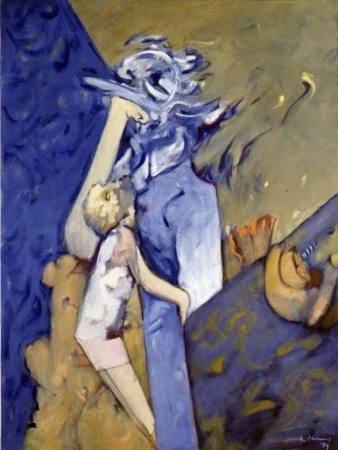
      Born in Argentina and educated in Italy, she had a deep knowledge of Renaissance art which often forms an elegant fusion with surrealists elements, which gives her work an unique character, easily distinguishable from other, maybe more orthodox group members. Personally and artistically independent, but with a wide circle of friends (it was a very pleasant surprise to read about her friendship with the Rochas couple ), she painted countless paintings, aquarells, etchings dealing with topics such as feminity, mythology, eroticism. The Sphinx, as in Little Hermit Sphinx  above, becomes one of her favorite "characters", although the Guardian of the Black Egg (below) shows her interest in alchemy , something Leonora Carrington and Remedios Varo were also interested in (I plan to post about them later). Others, such as Ideal Life, seem to spoof 19th century images of mythic (and menacing) feminity. I guess the Self-Portrait with Scorpion (last image) sums it up: a beautiful, sensual woman with a scorpion up her sleeve...
Guardian of the Black Egg

   Otro cumpleaños perdido (30 de agosto) y una de mis pintoras favoritas. A menudo se la considera surrealista, pero nunca formó parte del grupo. Whitney Chadwick escribe que era demasiado independiente para aceptar sin reservas la estructura rígida del grupo y sus actitudes hacia las mujeres. Sin embargo, era amiga personal de muchos de ellos y compartía varios de sus intereses y temas artísticos.      
      Nacida en Argentina y educada en Italia, tenía un conocimiento profundo del arte renacentista que en su obra se fusiona elegantemente con elementos surrealistas, haciendo que sus trabajos tengan una apariencia única, distinta de otros miembros del grupo, quizás más ortodoxos. Personal- y artísticamente independiente, pero con un amplio círculo de amigos (fue una sorpresa muy agradable leer sobre su amistad con la pareja Rochas), pintó innumerables pinturas, acuarelas, aguafuertes que tratan temas como la feminidad, la mitología, el erotismo. La Esfinge, como en Little Hermit Sphinx (la primera imagen), se convierte en uno de sus "personajes" favoritos, aunque en Guardiana del huevo negro (derecha) también muestra su interés por la alquimia, algo qur también era interesante para Leonora Carrington y Remedios Varo (planeo escribir sobre ellas más tarde). Otras, como La vida ideal, parecen burlarse de las imágenes decimonónicas de la feminidad mítica (y amenazante). Creo que el Autorretrato con escorpión (última imagen) lo resume: una mujer hermosa y sensual con un escorpión bajo la manga ...


Mémoire de fragments passés
Ideal life
La toilette inutile
Self-portrait with Skorpion

Monday, 27 August 2018

                    Dorothea Tanning (1910-2012)

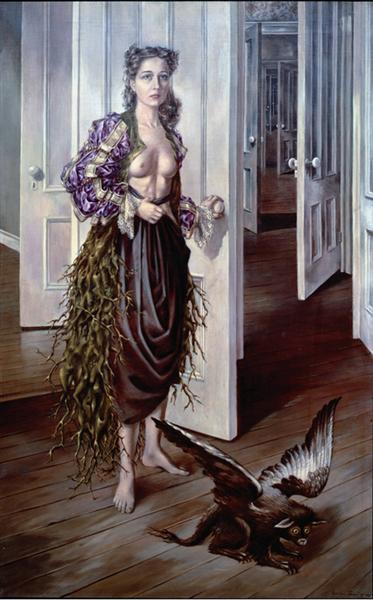
Birthday. 1942
    Dorothea Tanning´s birthday was, in fact, this past Saturday, August 25. She produced some of my favourite paintings and it´s a pity she isn´t better known. (Also, since The Guardian claimed rather bizarrly in a recent article that Lee Miller was the "lone woman within the surrealist scene" I guess I`ll be posting about some of them here. Lee Miller is amazing, her photography hypnotising and moving, but there were literally dozens of women involved in some degree with the "surrealist scene". Rant over.)
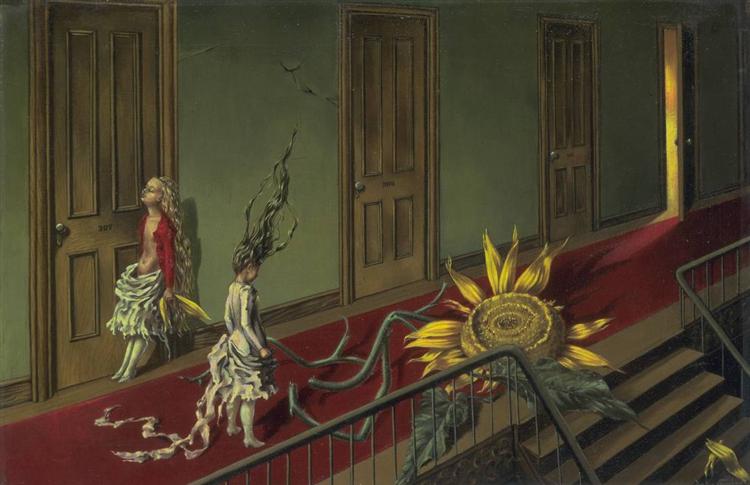
Eine kleine Nachtmusik. 1943
       The paintings above are from the mid-40s, her first splash of popularity when she lived and worked in New York (she was born in Galesburg, Illinois, which according to Wikipedia had about 22.000 inhabitants at the time). Both are typical of the mood in her art at the time, dreamy, suggestive, an illusion of soft, undulating movement about to leave the frame.
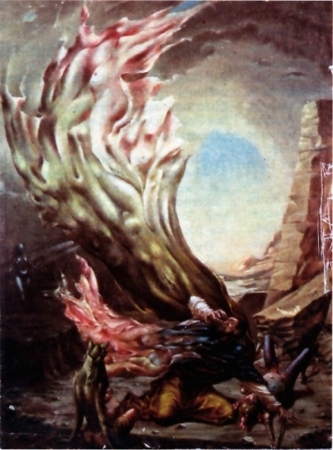
The Temptation of Saint Anthony, 1945
It was also there that she met her future husband, Max Ernst,  who introduced her "officially" into the surrealist group. The pair later moved to Arizona and then to France. They remained married until Ernst`s death. The painting on the left was her contribution to a Hollywood artistic competition for the otherwise unremarkable The Private Affairs of Bel Ami. Many contemporary artists took part, among them Ernst, Dali, Paul Delvaux or Leonora Carrington (Ernst won).
    In later decades, her paintings became increasingly abstract, although she always maintained the same aura of sensuality and an elegant, almost suggestive palette.

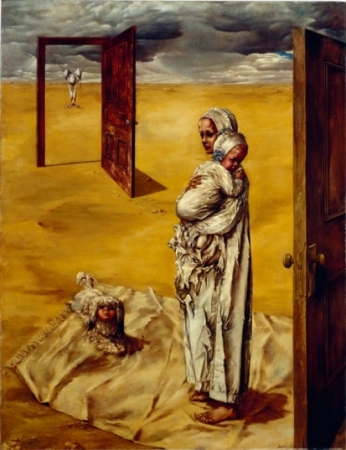
Below are two of her paintings on the same topics, motherhood, that show her evolution quite well: Maternity from 1946 on the left and Blue Mum from 1994 on the right


Friday, 17 August 2018

Fashion Book Friday: Schulze-Varell. Architekt der Mode (Schulze-Varell. Architect of Fashion)


This is my archive of fashion related books. Most of them are in English, but many are not. Some are new, but many are real finds. Depends on the topic, really...

Fashion is a curious business. We all participate in it to some extent, as we all need to dress, there are constantly new things in the shops, but this same activity and hectic often implies the memory span of a fruit fly. As soon as something is out of the shops, it might as well as not exist, and former prodigies are completely forgotten. This week´s book is about such a forgotten prodigy, the German Heinz Schulze-Varell.
Mode ist ein kurioses Ding. Wir sind alle zu einem gewissen Grad daran beteiligt, wir brauchen ja alle Kleidung, es gibt ständig neue Dinge in den Läden, aber die gleiche Aktivität und Hektik hat oft das Erinnerungsvermögen einer Fruchtfliege zufolge. Sobald etwas aus den Läden verschwindet, ist es, als ob es nie existiert hätte, und ehemalige Wunderkinder sind völlig in Vergessenheit geraten. Dieses Buch handelt von einem so vergessenen Wunderkind, dem Deutschen Heinz Schulze-Varell.
       Born in Berlin, he started his career at Hermann Gerson, easily the poshest, most exclusive fashion house in Berlin (more books on Berlin in the Twenties to come!), where he also met, and later
the glamourous couple
 married, Margarethe Kickler, called Kiki, granddaughter of architect Ernst Bandel (best known for this ). She was a fashion illustrator, a much more glamorous profession at the time than a model, and became her husbands muse/model/dressform.

       Geboren in Berlin, begann er seine Karriere bei Hermann Gerson, dem wohl vornehmsten und exklusivsten Modehaus in Berlin (weitere Bücher über Berlin in den zwanziger Jahren kommen noch!), wo er auch Margarethe Kickler, genannt Kiki, kennenlernte, die er später heiratete. Enkelin des Architekten Ernst Bandel (am besten bekannt für das Hermannsdenkmal). Sie war eine Modeillustratorin, damals ein viel glamouröserer Beruf als Modeln, und später wurde sie für ihren Mann Muse / Model / Schneiderbüste.

       Later, he worked for Gerson´s competitor, but after the Nazis came to power, his Jewish boss was forced to give up his business, and Schulze-Varell opened his own salon in Berlin (he had apparently been offered to buy his former employer out for cheap, as the so-called Aryanization, but refused. He said it felt like grave robbing.) He quickly became established as an elegant, does-not-just-copy-Paris address in Berlin, but this in itself brought problems: he was not a Nazi sympathiser, but neither was he prepared to leave everything behind and go in exile. A difficult balance was needed, avoiding demostrations of party loyalty or dressing the
Art Deco chic, 1934
wives of the new Nazi elite, but at the same time not doing anything that might seem provokative. It didn´t always work, he very narrowly avoided being sent off to Stalingrad as a punishment for insubordination, but protection from film stars (who, in turn, were key to the Nazi propaganda machine) helped him stay in Berlin until the end of the war.
       Später arbeitete er für Gersons Konkurrenz, aber nach der Machtergreifung durch die Nazis musste sein jüdischer Chef sein Geschäft aufgeben, und Schulze-Varell eröffnete seinen eigenen Salon in Berlin (anscheinend war ihm das Geschäft seines früheren Arbeitgebers im Rahmen von "Arisierungsmaßnahmen" billig angeboten worden, aber lehnte ab. Er sagte, es käme ihm wie Leichenfledderei vor). Er etablierte sich schnell als eine elegante, Kopiert-nicht-bloß-Paris-Adresse in Berlin, aber das brachte wiederum Probleme: Er war kein Nazisympathisant, aber er war auch nicht bereit, alles hinzuschmeißsen und ins Exil zu gehen. Das erforderte eine schwierige Balance, einerseits, um die Loyalitätsbekundungen zu vermeiden oder den Frauen der neuen Nazi-Elite auszuweichen, aber gleichzeitig nichts zu tun, was die Machthaber zu sehr reizen könnte. Es funktionierte nicht immer, um ein Haar wäre er als Strafe für Ungehorsam nach Stalingrad eingezogen worden, und nur die Protektion von Filmstars (die wiederum eine Schlüsselrolle in der Nazi-Propagandamaschine hatten) half ihm, bis zum Ende des Krieges in Berlin zu bleiben.

  After the war, he re-opened in Munich. The picture on the left is an example of the first post-war collections: warm, and made out of whatever was at hand, in this case, uniforms (uniforms were actually banned by the allies, but seeing the general shortage of clothing and fabrics, they ignored civilian clothing made out of uniforms (or even flags), as long as all Nazi insignia had been removed). He remained in Munich until his death in 1985.

 Nach dem Krieg öffnete er sein Salon in München wieder. Das Bild links ist ein Beispiel für die ersten Nachkriegskollektionen: warm und aus dem gemacht, was gerade zur Hand war, in diesem Fall Uniformen (Uniformen wurden eigentlich von den Alliierten verboten, aber wegen des allgemeinen Mangels an Kleidung und Stoffen  ignorierten sie  aus Uniformen (oder sogar Fahnen) gefertigte Zivilkleidung, solange alle Nazisymbolen entfernt worden waren). Er blieb bis zu seinem Tod 1985 in München.


The book, however, in not particularly heavy on text, it is rather a catalogue of his work from the earliest designs under his own name, such as the dress above, to the sketches for his last collection 1985, the year of his death. Some examples are below. 
 Das Buch  ist  jedoch nicht gerade textlastig, es ist vielmehr ein Katalog seines Werkes, von den frühesten Entwürfen unter seinem eigenen Namen, wie das Kleid oben, bis zu den Skizzen für seine letzte Kollektion 1985, seinem Todesjahr. Ein paar Beispiele unten.
Experimental 50s design: wool fringe cape.


evening gown, 1962


sketch from his last collection, 1985

flower child, 1972 (the flowers are red plastic)


It is very much out of print (edited in 1991) but if you want to try your luck, the ISBN is 3-925835-86-5.  
Es ist natürlich vergriffen (herausgegeben 1991), aber wer sein Glück versuchen möchte, die ist ISBN 3-925835-86-5.

Friday, 10 August 2018

Fashion Book Friday: Chanel. The Couturiere at Work by Amy De La Haye


This is my archive of fashion related books. Most of them are in English, but many are not. Some are new, but many are real finds. Depends on the topic, really...

       When I was looking for a book about Chanel, I wanted one that would concentrate specifically on Coco´s work (rather than on the entire House of Chanel) and this book, first published in 1995, turned out to be just it. 

  It begins by tracing whatever little is known about her childhood and her beginnings in the fashion business. While today she is mainly associated with the roaring twenties, she in fact open her first shop (with financial help from her lover) around 1908 and quicky became known as the purveyor of excentrically, even radically simple hats and later clothes. The cartoon on the left is from 1914 and gives an idea about her popularity (and reputation) before the Great War. 
    She went main stream around 1917, when her simply cut, made with simple materials, jersey suits, sold in boutiques in sea side resorts, first Deauville, later Biarritz, hit the nerve of the times and her designs began appearing in fashionable magazines in Europe and America.  


     In the following decades, Coco became one of the biggest designers in France and her clothes, while still simple in their overall style, began using luxurious materials, such as furs, silks, laces or hand embroidery, that often covered the entire surface of the dress. She also launched her first (and still most popular) perfume, Nr 5, in collaboration with the incredibly talented Russian-French perfumer Ernest Beaux. An exclusive line of fake jewellery followed (she is wearing several pieces in the photo on the right), it was the first time that a designer managed to give fake jewels the same prestige real ones would have. In those busy years, she also began collaborating with theatre (in the picture below are her wonderfully archaic looking costumes for Jean Cocteau´s version of Antigone) and Hollywood, although she only made costumes for three movies, as she reportedly felt too
constrained by the working conditions she encountered (such as actresses refusing to be told by her how exactly to dress, and she herself refusing to follow the actresses´ lead).
    The simple lines of twenties´ fashion meant it was easy to mass produce copies (something the Chanel herself encourages rather than blocked), so that she quickly became a household name to people who would never be able to afford a Chanel original, but gladly bought a copy.
   All was not well, however. Apart from her style or glamour, Chanel was also (in)famous for low pay and bad working conditions - she even was reported to say that her "girls" could always get themselves lovers if they wanted more money. So, perhaps unsurprisingly, her house was rocked by a massive strike in 1936. She intially refused to accept the demands, but finally relented after it became clear that otherwise she might not be able to produce and present the next collection.
  Technically, Chanel was not "at work" between 1940 and 1953, so this books deals with this entire period in a few sentences - so, if you are interested in the often discussed question of her assumed collaboration with the Nazis in occupied Paris, you won´t find anything here. 
      Her return in 1953 produced her probably most famous piece, the "Chanel suit" (on the right), that has since been produced in hundreds of variations, thousands if you count the copies. The revolutionary character of this relaxed yet luxurious outfit becomes clear if you compare it to the hyper-feminine creations presented at the time by her (male) colleagues like Christian Dior or Marcel Rochas (Rochas is already on this blog, Dior is coming up). She mantained an iron grip on her house until her death in 1971 and became probably the most famous name in fashion in her century, even when her creations were becoming rather something for the "mature set" - Chanel famously rejected both the miniskirt and pants for women. It remained a task for her successor, Karl Lagerfeld, to integrate pants into the Chanel look.   
 The final chapter looks at how Lagerfeld kept her signature style always up to date through the 80´s and 90´s, using new materials, like jeans or leather, or cuts - trousers, shorts, tops. It always remained very much Chanel (on the left, Nadja Auermann models a "versacefied" early 90´s version).


So, if you are interested in Mademoiselle herself and can accept a rather cursory look at Karl the Great´s work, this is definitely worth it.


Monday, 6 August 2018

                                                 Ilya

   
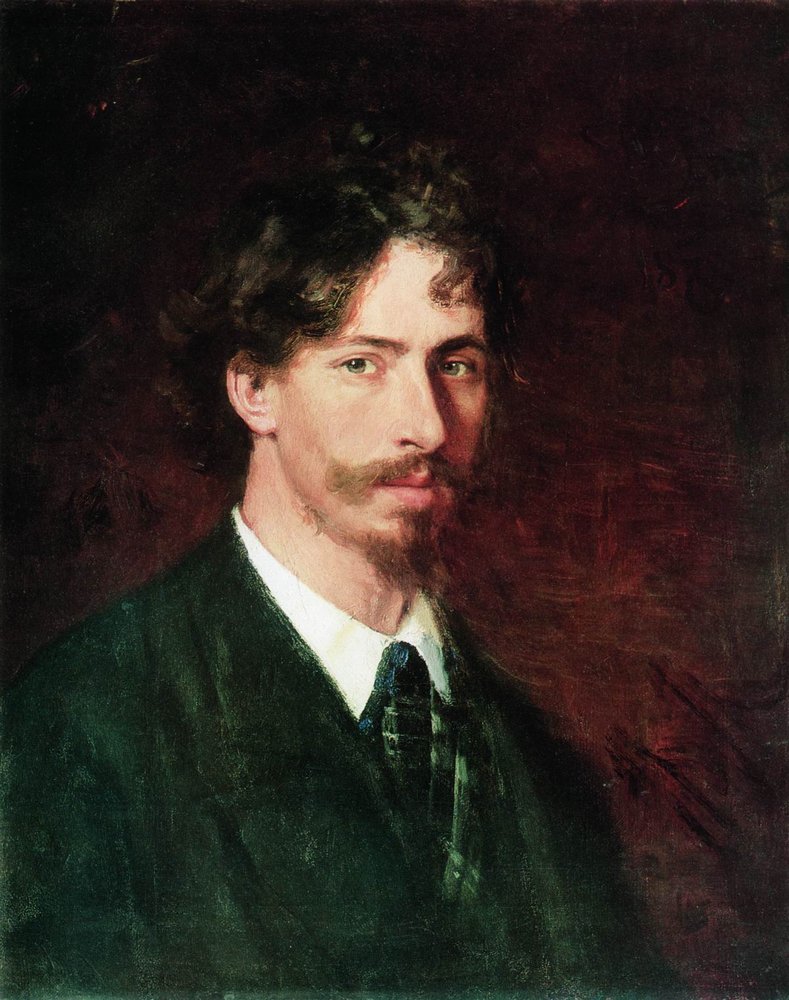
       Sorry for the long silence, things got in the way. Anyway, yesterday was the birthday of Ilya Repin (1844-1930), so why not write a post about him. After all, even if you are not terribly interested in Russian art (especially if you are not), his paintings are probably the ones you might have seen anyway (all sources: Wikimedia).
This for example
   And although his paintings made him famous almost immediately, they also almost inevitably caused a scandal. Barge Haulers on the Volga (1870-73) caused a sensation for depicting a "vulgar" a "low" subject matter in a monumental, "epic" setting, although it did strike a nerve and became the foundation of his career as a painter.
or this.

Ivan the Terrible and His Son Ivan on November 16th, 1581 (1885) on the other hand, is easily the most scandalous painting in Russian history. Developed and painted under the impression left by the assassination of Tsar Alexander II in 1881, it shows the moment after Ivan the Terrible killed his own son in a fit of rage, the tsar cradling the dead body of his eldest child (while we have no actual documental proof of how exactly the prince died, there are many contemporary records, both Russian and by foreign diplomats, that show that there was in fact a rumour in Moscow that the Tsar had killed his own son with a blow on the head). The bloodied image of the dead prince and the scared, crazed expression on the tsar´s face caused such a shock with contemporary audiences that it was immediately officially prohibited by tsar Alexander III, even if only for a few years. It has since become the favourite hate object of different conservative groups - who believe that it demeans royal, and therefore state, authority, and it has repeatedly been vandalised - the last time just this year.

   Although Repin is best known for his historical and genre paintings, he also excelled at portraits that captured the sitter´s grace, individuality and emotional state, such as this portrait of  the composer Modest Mussorgsky, painted just a few days before his death in 1881. His glance, attentive and intelligent in spite of the visibly grave illness, somehow shows his unique sensibility more than any photography ever could.


I have to admit though that my favourite painting is this: Sadko (1874). Painted as a reaction to the impressionists, whom he found technically interesting but lacking substance, it shows a scene from the legends about Sadko, a Sindbad-like character. Sadko, a sea merchant, winds up at the Sea Kings´s court, and observes a procession of the court ladies. Funnily enough, some critics found that Sadko, too, was lacking substance, narrative or artistic, but for me, this painting is pure magic. Seen "live", it does indeed give the impression of being under water, a sensation completely lost in reproduction, and standing in front of it, you do feel transported for a moment into this magic dimension, that feels so real and at the same time so phantastic. Art not even trying to imitate life, rather inventing its own dimensions of meaning.

Friday, 13 July 2018

Fashion Book Friday: Marcel Rochas. Designing French Glamour by Sophie Rochas

This is my archive of fashion related books. Most of them are in English, but many are not. Some are new, but many are real finds. Depends on the topic, really...

Almost forgotten today, Marcel Rochas was nonetheless one of the most important couturiers of the mid-twentieth century, in large part responsible for the iconic image of the enigmatic, impeccable French feminity. With this book, by his daughter Sophie, he finally has the splendid volume he deserves. 
   

        It is richly illustrated, with a mixture of close-ups of clothes, contemporary fashion photography and pictures from the family archive, like the ones on the right, and those latter distinguish this book form so many others. It is certainly not rare to find a fashion book, even a coffee-table picture collection, driven by an endless love of fashion, attention to detail and perfectionism, but finding a book that at the same time breathes intimacy, that speaks not only of the master of fashion, arbiter of taste etc, but also of the brother, son, husband, father, friend, or even simply the private person that enjoys a weekend in the sun.
Sophie Rochas mixes her private memories of her parents (her mother Hélène was her father`s favorite model and muse) with chapters on marketing, her father`s work for the cinema (he opened a division dedicated to working with film and dressed many French stars, such as Jean Marais) or his iconic perfume Femme (launched 1945 and still available after over 70 years).


  Sophie also cronicles his progression from jazzy, stream-lined fashion of the Twenties, to the elegantly dramatic gowns of the Thirties that show a clear influence of surrealism, such as his famous Bird dresses (one of them is featured in the picture on the left) to the mature, almost uber-feminine, yet never cloying, gowns of the postwar period. Gala gowns, smart suits, hats, underwear, swimwear, perfume...  The Rochas woman, best personified by his second wife Hélène, rises from these pages like some phantom of absolute beauty, and while leafing through it, I felt the wonder Sophie described when, as a little girl, she saw her mother transform into this beatiful creature at the hands of her father.
    At the same time, she describes enough of the backstage work to have a glimpse of how this illusion of unearthly beauty came about: she includes the memories of people who worked with her father, describes working and living conditions in occupied Paris (Rochas was one of the houses that decided to stay open during occupation), especially the fight of the couturiers to not let themselves be controlled by German forces. This might sound trivial at first, after all, it`s just the luxury segment of the rag trade, but by then, the fashion industry had become synonymous with France, of great economic importance, and the Germans were very much interested in controlling it and ideally transporting it to Berlin, which was to become the new centre of everything, including fashion (ironically, they were at the same time  destroying the actually vibrant fashion industry in Berlin, apparently "too many Jews" were involved, but that`s for another occasion). It was therefore a great achievement of the French fashion industry, lead by Lucien Lelong, to remain independent .
Apart from designers and models, friends and customers of the glamourous couple appear on the pages, many actors, but also Evita Perón, wife of the Argentinean president, whose life was later turned into a musical (Evita), and, first and foremost, the painter Leonor Fini, who was apparently a close friend. I have to admit I had no idea, and seeing both photos of and paintings by (above) my favourite painter was a particularly pleasant surprise.
And to finish, this statement by Rochas. I´m not saying this is the last word on the topic, but it is a captivating observation on different attitudes of male and female designers when it comes to dressing, and ultimately treating, the female body.


Tuesday, 3 July 2018

                              Happy Birthday, Juana Manuela


   I originally meant to post this a bit earlier, but well...
   Originalmente iba a postear eso hace semanas, pero me traspapelé...
   
Around 200 years ago, in the (future) Argentinean province of Salta, a girl was born, who, for me, would become one of the most interesting person of her age: Juana Manuela Gorriti. Her precise date of birth is not known - precise record keeping was not a priority in the Civil War-torn provinces of South America. They were in the process of winning their independance from Spain, and years away from forming a state of their own. A letter written by her father suggests she was actually born in 1816, but she liked to say in was in 1818, so let`s believe her :)
Hace unos 200 años, en la (futura) provincia argentina de Salta, nació una niña que, para mí, se convertiría en una de las personas más interesantes de su época: Juana Manuela Gorriti. Desconocemos la fecha exacta de su nacimiento: mantenimiento preciso de registros no era una prioridad en las provincias sudamericanas, desgarradas por una guerra civil. Estaban en el proceso de ganar su independencia de España, y años lejos de formar un estado propio. Una carta escrita por su padre sugiere que en realidad nació en 1816, pero le gustaba decir que era en 1818, así que vamos a creerla :)
     It can be really hard to say what was more dramatic: her life or her work as a writer. Daughter and niece of celebrated politians and governors, she went with her parents into exile as a teenager. Later, she married in Bolivia Manuel Isidoro Belzú, an officer who went on to become president of Bolivia after a coup d'etat. Juana Manuela lived at that time in Lima, Peru, where she ran a girls' school and regularly organized literary soireés that became a fixture of Peruvian cultural life. However, when Belzú, who ran a populist government, was killed after another coup, she was the one to recover his body and give him a burial. She spent the last years of her long life (definitely over 70) in Buenos Aires, dedicated to organizing and editing her literary work.
    Es realmente difícil decir lo que fue más dramático: su vida o su obra. Hija y sobrina de célebres políticos y gobernadores, se exilió con sus padres cuando era adolescente. Más tarde, se casó en Bolivia con Manuel Isidoro Belzú, un oficial que llegó a ser presidente de Bolivia después de un golpe de estado. Juana Manuela vivió en esa época en Lima, Perú, donde dirigía una escuela para niñas y regularmente organizaba veladas literarias que se convirtieron en un hito de la vida cultural peruana. Sin embargo, cuando Belzú, quien dirigía un gobierno populista, fue asesinado luego de otro golpe,fue ella  quien recuperó su cuerpo y le dio un entierro. Pasó los últimos años de su larga (definitivamente más de 70 años) vida  en Buenos Aires, dedicada a organizar y editar su obra literaria.
     And this is quite varied. She was one of the first in Latin America to write horror, or Gothic novels, to write about the countryside and its inhabitants, to study and value the local, not the imported from Europe. Her true Americans are the peasants, the gauchos, the indians, the blacks... not the "European" élite of the big cities. And yes, she says Americans, because she is not a nationalist , if anything, she is a "regionalist", her heart is with the Paraguyan victim of war, not with the Argentinian soldiers commiting the massacre.
Y esta obra es bastante variada. Fue una de las primeras en América Latina en escribir novelas de terroro góticas, en escribir sobre el campo y sus habitantes, en estudiar y valorar lo local, no lo importado de Europa. Sus verdaderos americanos son los campesinos, los gauchos, los indios, los negros ... no la élite "europea" de las grandes ciudades. Y sí, dice que los americanos, porque ella no es nacionalista, si es algo, es "regionalista", su corazón está con la víctimas paraguianas de la guerra, no con los soldados argentinos que cometen la masacre.
Later in life, she edited a cookbook, Cocina ecléctica, a step that surprised many contemporaries, who considered cooking beneath an intellectual like her, but it is a fascinating read that tells a lot about society at that time. It contains a mixture of local and international recipes, some dishes are served "with chilli sauce for the Americans and Worcester sauce for the British", there is an "omelette for young girls" (no spices! apparently you have to marry before being allowed to eat chilli or oregano..)
Más tarde en su vida, editó un libro de cocina, Cocina ecléctica, un paso que sorprendió a muchos de sus contemporáneos, que consideraban la cocina indigna para un a intelectual, pero este libro es una lectura fascinante que cuenta mucho sobre la sociedad en ese momento. Contiene una mezcla de recetas locales e internacionales, algunos platos se sirven "con salsa de ají para los criollos y salsa Worcester para los británicos", hay una "tortilla para jovenes" (¡sin especias! Al parecer hay que estar casada para que se permita consumir ají u orégano ..) 
    Not much of her work is available in English, although some selected fiction is available in translation. In Spanish, there is a new edition of her complete works (picture above).
   La imagen de arriba es de una nueva edición de sus obras completas, de La Crujía Ediciones.

Friday, 29 June 2018

     Fashion Book Friday: Cristóbal Balenciaga. The Making of a Master (1895-1936) by Miren Arzalluz

 This is my archive of fashion related books. Most of them are in English, but many are not. Some are new, but many are real finds. Depends on the topic, really...

     After last week`s book about Madeleine Vionnet, today is the turn of one of her friends and (initially) protegés, Cristóbal Balenciaga. Born 1895 in a small fishing village on the Basque coast in Spain, his life is an incredible mix of a rather humble origin, unique talent, hard work, and an incredible knack for establishing connections that helped him advance. Although this book focuses primarily on his life and carreer before the opening of his Paris house in 1936, it also contains examples and discusses his work after this date.
Después de contarles la semana pasada sobre Madeleine Vionnet, hoy es el turno de uno de sus amigos y (inicialmente) protegidos, Cristóbal Balenciaga. Nacido en 1895 en un pequeño pueblo de pescadores en la costa vasca en España, su vida es una mezcla increíble de origen humilde, talento único, trabajo duro y una habilidad increíble para establecer conexiones que lo ayudaron a avanzar. Aunque este libro se enfoca principalmente en su vida y carrera antes de la apertura de su casa en París en 1936, también contiene ejemplos de y discute su trabajo después de esta fecha.
    Now, what do I mean by "humble origin" and "connections" ? His parents were a fisherman and a seamstress, his father died when Cristóbal was 12, leaving his mother as the main breadwinner (Cristóbal himself entered an apprenticeship when he was twelve, beginning to earn some money himself). But, and it is a big but, the Basque coast was a very special place a hundred years ago. 
    ¿A qué me refiero con "origen humilde" y "conexiones"? Hijo de padre pescador  y madre costurera, su padre murió cuando Cristóbal tenía 12 años, dejando a su madre como cabeza de hogar (el mismo Cristóbal ingresó a un aprendizaje cuando tenía doce años, comenzando a ganar algo de dinero). Pero, y es un gran pero, la costa vasca era un lugar muy especial hace cien años.
  Favourite summer holidays destination for the Spanish (and French) royalty during the second half of the 19th and early 20th century, it was quite glamorous and cosmopolitan  ( the woman on the felt wears pants for ladies in San Sebastián in 1911, the same year they caused quite a stir in Paris), and the Balenciagas were among those who provided the necessary infrastructure. His father took members of the aristocracy on his boat for coast trips, his mother sewed the Royal Family`s summer wardrobe, so, when a teenaged Cristóbal began his professional career, there were people willing to help and opportunities difficult to imagine elsewhere. The first few chapters of the book describe this exuberant atmosphere of an upper class resort, the elegant and fashion-conscious clients of young Cristóbal and his mother, his early jobs, in the resort branch of the . On frequent trips to Paris for his employer, he met Madeleine Vionnet - and Chanel when she came to San Sebastián to set up a branch of her maison. He remained good friends with both - quite a feat, as they didn`t like each other.
Destino favorito de vacaciones de verano para la realeza española (y francesa) durante la segunda mitad XIX y principios del siglo XX, era   glamoroso y cosmopolita (la mujer en la foto lleva pantalones para damas en San Sebastián en 1911, el mismo año en que causaron un gran revuelo en París), y los Balenciaga estuvieron entre los que proporcionaron la infraestructura necesaria. Su padre llevaba a miembros de la aristocracia en su bote en viajes de palcer por la costa, su madre cosía el guardarropa de verano de la familia real, así que cuando  un Cristóbal adolescente comenzó su carrera profesional, había gente dispuesta a ayudar y oportunidades difíciles de imaginar en otra parte. Los primeros capítulos del libro describen esta atmósfera exuberante de un lugar de veraneo de clase alta, las clientes elegantes y siempre atentas a la moda, sus primeros trabajos en la sucursal local de los Grand Magasins du Louvre. Viajaba frecuentemente a París para su empleador, donde conoció a Madeleine Vionnet, y a Chanel cuando ella vino a San Sebastián para establecer una sucursal de su maison. Se convertió en buen amigo de ambos, una verdadera hazaña, ya que las dos no se querían entre sí.

     So, when he finally took the big step of founding his own couture house in 1918, many of the customers who knew him from his previous jobs or even since childhood, followed him and helped him to establish himself as a leading young couturier, both in San Sebastián and Madrid. The elegant dress on the right is from 1927, and the author makes quite a deep and detailed analysis of this, little known phase of his life.
Entonces, cuando finalmente dio el gran paso de fundar su propia casa de costura en 1918, muchos de los clientes que lo conocieron de sus empleos anteriores o incluso desde la infancia, lo siguieron y lo ayudaron a establecerse como un joven couturier exitoso, tanto en San Sebastián como en Madrid. El elegante vestido a la derecha es de 1927, y la autora hace un análisis bastante profundo y detallado de esta fase poco conocida de su vida.
   The proclamation of the Spanish Republic in 1931 (which meant exile for many members of the Spanish court) dealt a blow to his business, and he began considering moving to Paris, a step he took in 1936, after the outbreak of the Civil War (although he did reopen the Madrid salon once the war was over).    
La proclamación de la República española en 1931 (que significó el exilio para muchos miembros de la corte española) resultó ser un golpe duro para su negocio, y comenzó a considerar mudarse a París, un paso que tomó en 1936, después del estallido de la Guerra Civil ( aunque reabrió el salón de Madrid una vez terminada la guerra).


 The last chapters are dedicated to the study of different influences on his work, such as Spanish art or traditional clothing (such as in the dress on the left), Japanese art, 18th century fashion, the almost abstract, always impeccably beautiful lines of his clothes in later years, as in the dress on the left.
 Los últimos capítulos están dedicados al estudio de diferentes influencias en su trabajo, tales como el arte  o la vestimenta tradicional españoles (como el vestido a la izquierda), el arte japonés, la moda del siglo XVIII, o las líneas casi abstractas, siempre impecablemente hermosas de su vestidos en años posteriores, como en el vestido de la izquierda.

Balenciaga was one of the technically most accomplished and most innovative designers of the 20th century. Hopefully, the current popularity of the brand draws renewed attention to his own work. He more than deserves it. 
Balenciaga era uno de los diseñadores técnicamente más desarrollados e innovadores del siglo XX. Esperemos que la popularidad actual de su marca atrae una atención renovada a su propio trabajo. Lo tiene más que merecido.


Friday, 22 June 2018

Fashion Book Friday: Madeleine Vionnet by Betty Kirke


This is my archive of fashion related books. Most of them are in English, but many are not. Some are new, but many are real finds. Depends on the topic, really...

         Madeleine Vionnet is herself in many ways like that incredibly hard to photograph silhouette on the cover (this was my best effort, sorry): if you ever wore one of those slinky,  comfy but stylish bias-cut dresses or skirts, or clothes with an unusual cut, such as atacac.com  make, you wear things that own their existence to Vionnet`s pioneering work in cut and design. But her name will probably be unknown to most people, which also makes Betty Kirke´s book such a treasure trove.


The first part of the book tells Vionnet`s biography and her meteoric rise to a fashios superstar - at age 12, she was forced to leave school and start earning money as a tailor´s apprentice, at age 19, she was already head of Kate Reilly`s workshop in London and worked for the then very famous house Callot Soeurs (descendants of the 17th-century printmaker Jacques Callot ). She later claimed, it was thanks to them that she learned to make Rolls-Royces instead of Fords - a jab at her competitor Coco Chanel, whose little black dress was compared to a Ford T-model. Vionnet had her own fashion house in 1912, and during the Twenties was one of the first to offer ready-made clothing under an American license (this business survived until the Wall Street Crash of 1929).
    I have to admit though that what most struck me when I first read about her was her focus on sewists`s working condition. She said that one of her earlier experiences was when she and her boss made two absolutely identical blouses (for twins), but she was paid only a fraction, because she was just a lowly apprentice. Throughout her working life, she made sure her employees worked in good conditions - the picture below shows her - well lit and ventilated - sewing room. 
  She was also the first to offer perks that went far beyond what the law demanded, such as free lunches, on-site doctors and child care, maternity leave and paid vacations.  In an industry that to this day is known in first place for abysmal pay and horrible working conditions, this is so unusual I think we all need reminding that yes, it is possible to treat workers humanely while remaining economically competitive.
    Vionnet closed her salons at the outbreak of WWII and did not reopen afterwards, as she was already over 70 at that point - although it is very possible that her slinky and flowing style would have struggled in the heavily structured fashiones of the 50s. She lived to be almost 99.
          
    And here we come to the most important bit about her work (and Kirk`s book) - her absolutely incredible, try-to-wrap-your-head-around-that designs. She never worked with sketches, instead she had a small doll on which she draped her designs directly, which lead to a very different perspective on the body and how to dress it - on the right is the front- and back view of a dress from the thirties. In fact, her designs almost never follow the conventional scheme of "front, back, sleeves, collar etc". So should you try to replicate your very own Madeleine Vionnet designer knock off, you´re probably in for a very steep learning curve.

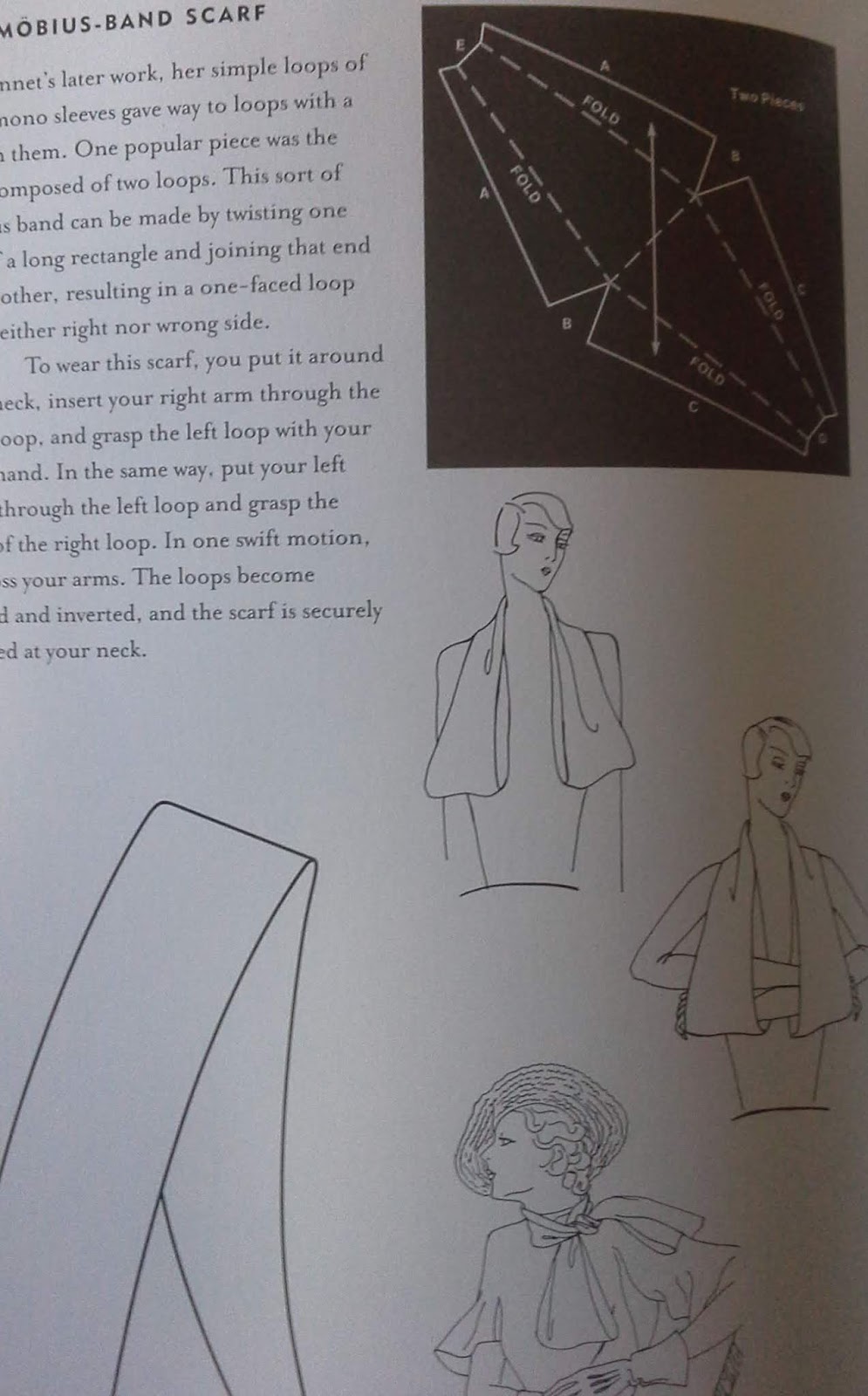
    Because the unique thing about this book is that Betty Kirk offers, apart from an interview with Vionnet, probably one of her last,  and excellent fotos of original garments, diagrams of a series garment from the late teens to the late thirties. They give an astonishing insight into her construction techniques and - in my case - completely turned around the ideas about what is doable and what isn´s in couture . Not to mention understanding how the often unpopular task of cutting the fabric is the starting point for pure magic.
 So, in theory, you could try to replicate those garments - mostly dresses, but also pyjamas, accessories and even coats. but the diagrams are without any sort of scale, which requieres a lot more more effort, calculations and measure-taking on your side. Personally, I only had the courage to replicate the lovely moebius scarf (picture left), and getting even this little bit to scale was quite a bit of head-scratcher. But, yes, it is every bit as elegant and stunning as you would suppose it to be. It drapes into an elegant flower-like knot by a simple movement of the arms, unlike any other scarf or cowl I have seen.


This is a book for a fashion aficionado with an interest for both aesthetic and the technical side of the craft, although a lot of skill and couture confidence will be needed if you actually want to reproduce any of the garments.

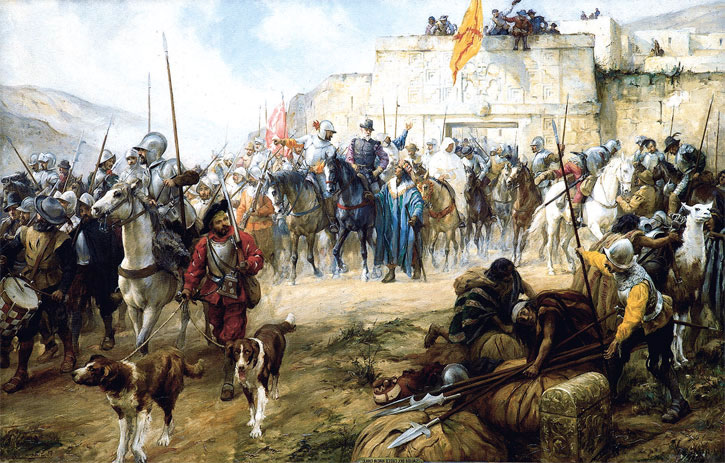
Die rote Stadt Zusatzinfos, Teil 8: Die Cäsarenstadt Expedition von Almagro in Chile v. Pedro Subercaseaux. wikipedia       In ...