Showing posts with label Russia. Show all posts

Monday, 6 August 2018

                                                 Ilya

   
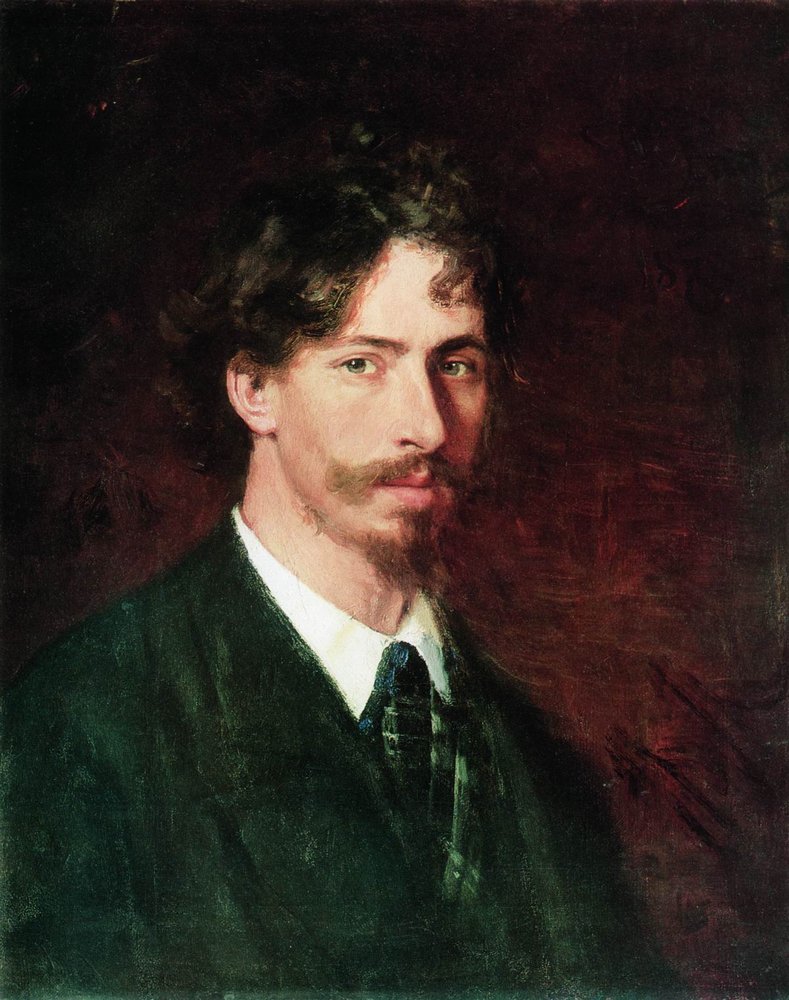
       Sorry for the long silence, things got in the way. Anyway, yesterday was the birthday of Ilya Repin (1844-1930), so why not write a post about him. After all, even if you are not terribly interested in Russian art (especially if you are not), his paintings are probably the ones you might have seen anyway (all sources: Wikimedia).
This for example
   And although his paintings made him famous almost immediately, they also almost inevitably caused a scandal. Barge Haulers on the Volga (1870-73) caused a sensation for depicting a "vulgar" a "low" subject matter in a monumental, "epic" setting, although it did strike a nerve and became the foundation of his career as a painter.
or this.

Ivan the Terrible and His Son Ivan on November 16th, 1581 (1885) on the other hand, is easily the most scandalous painting in Russian history. Developed and painted under the impression left by the assassination of Tsar Alexander II in 1881, it shows the moment after Ivan the Terrible killed his own son in a fit of rage, the tsar cradling the dead body of his eldest child (while we have no actual documental proof of how exactly the prince died, there are many contemporary records, both Russian and by foreign diplomats, that show that there was in fact a rumour in Moscow that the Tsar had killed his own son with a blow on the head). The bloodied image of the dead prince and the scared, crazed expression on the tsar´s face caused such a shock with contemporary audiences that it was immediately officially prohibited by tsar Alexander III, even if only for a few years. It has since become the favourite hate object of different conservative groups - who believe that it demeans royal, and therefore state, authority, and it has repeatedly been vandalised - the last time just this year.

   Although Repin is best known for his historical and genre paintings, he also excelled at portraits that captured the sitter´s grace, individuality and emotional state, such as this portrait of  the composer Modest Mussorgsky, painted just a few days before his death in 1881. His glance, attentive and intelligent in spite of the visibly grave illness, somehow shows his unique sensibility more than any photography ever could.


I have to admit though that my favourite painting is this: Sadko (1874). Painted as a reaction to the impressionists, whom he found technically interesting but lacking substance, it shows a scene from the legends about Sadko, a Sindbad-like character. Sadko, a sea merchant, winds up at the Sea Kings´s court, and observes a procession of the court ladies. Funnily enough, some critics found that Sadko, too, was lacking substance, narrative or artistic, but for me, this painting is pure magic. Seen "live", it does indeed give the impression of being under water, a sensation completely lost in reproduction, and standing in front of it, you do feel transported for a moment into this magic dimension, that feels so real and at the same time so phantastic. Art not even trying to imitate life, rather inventing its own dimensions of meaning.

Friday, 6 July 2018

Fashion Book Friday: Russkaya moda. 150 let v fotografiyakh (Russian Fashion. 150 Years in Photos) by Alexandr Vassilyev

This is my archive of fashion related books. Most of them are in English, but many are not. Some are new, but many are real finds. Depends on the topic, really...

     This is one of those books that took me years to find, after leafing through them in a library (Btw: the picture above is the "mini"Version, which is what I have. The book in the foto is the original, large-format version. The content is the same, as far as I can see) .
The author, Alexandr Vassilyev, is currently one of the major experts on the history of fashion in Russia, a one-man Costume Institute, and this book is incredibly thorough. Since its focus is on fashion through photography, it begins in the 1850, so nothing from Pushkin`s age, but after that, it runs the full gamut from frothy salon beauties to edgy post punk styles


It´s organized by decades and each decade in turn in women´s, men`s and children´s fashions, so it is very methodical and easy to work with. Pictures of royalty, music and film stars, revolutionaries, soldiers and many anonymous people parade on its pages, showing effectively how fashion reflects a country`s history. In his text, Vassiliev also always establishes connexions between what people wore and what social, political and economical upheavals they lived through.
These young ladies wear dresses made out of priests´ clothing, as much of the nation´s industry collapsed during the civil war, and the textile industry was not a priority for the new government.
The late fifties brought a change in attitudes, an international youth festival
 for the first time in decades brough foreigners into close contact with soviet citizens, and Dior made a fashion show on the Red Square (picture on the right).
     The situation with the availability of clothing a fashionable goods improved somewhat, though it was still far from great. The author tells about the role smugglers and importers of foreign goods played, and how effectively class divisions remained visible through clothing: access to imported goods, access to (very expensive) "Fashion Houses" where made-to-measure was available for the elite. Smaller ateliers were available to the middle class in bigger cities, still quite expensive, as off-the-rack remained a bit underwhelming throughout the existence of the Soviet Union.
   But in these relatively prosperous times, a new, less agressive female ideal became established, so most soviet women found themselves somewhere between those two:


Valentina Tereshkova, first woman in space
Irina Miroshnichenko, actress

Another lovely detail of this book is that, since it includes a lot of everyday clothes, some hard to find items are also here, such as early knits:
one is this surprisingly modern looking shawl from the 1880s. What looks like eyelash yarn is actually swan down.

or this toque and scarf set from the 30s

or this lovely early 70s hippie


Overall I love this book, both eye candy and a detailed, thorough read, a different way to understand history and changes in norms and attitudes - one of the reasons I love the study of fashion history so much. Just a pity it´s so hard to come by. In any case, the ISBN is: 978-5-387-00115-4 


Die rote Stadt Zusatzinfos, Teil 8: Die Cäsarenstadt Expedition von Almagro in Chile v. Pedro Subercaseaux. wikipedia       In ...